Instagram Facebook Youtube linkedin

Science and Humanity

ABOUT DEPARTMENT

 Welcome to the Science and Humanities Department which lays the foundation for a successful career in Engineering at International Centre of Excellence in Engineering and Management. The first-year students are initiated into I.C.E.E.Ms way of learning and are groomed to take up their roles in society not only as good engineers but as good human beings.

Applied Mathematics, Applied Physics, and Applied Chemistry the three basic pillars of engineering are taught through lectures, practical’s and tutorials.

The faculty members are closely associated with first-year students through the "Teacher Guardian Scheme". The attendance, academic performance of the students is monitored regularly, and the report is sent to the parents from time to time through SMS.Student's counselling sessions are conducted regularly. Monthly Class tests and preliminary examinations are conducted to enhance the performance of the students in university final examinations.

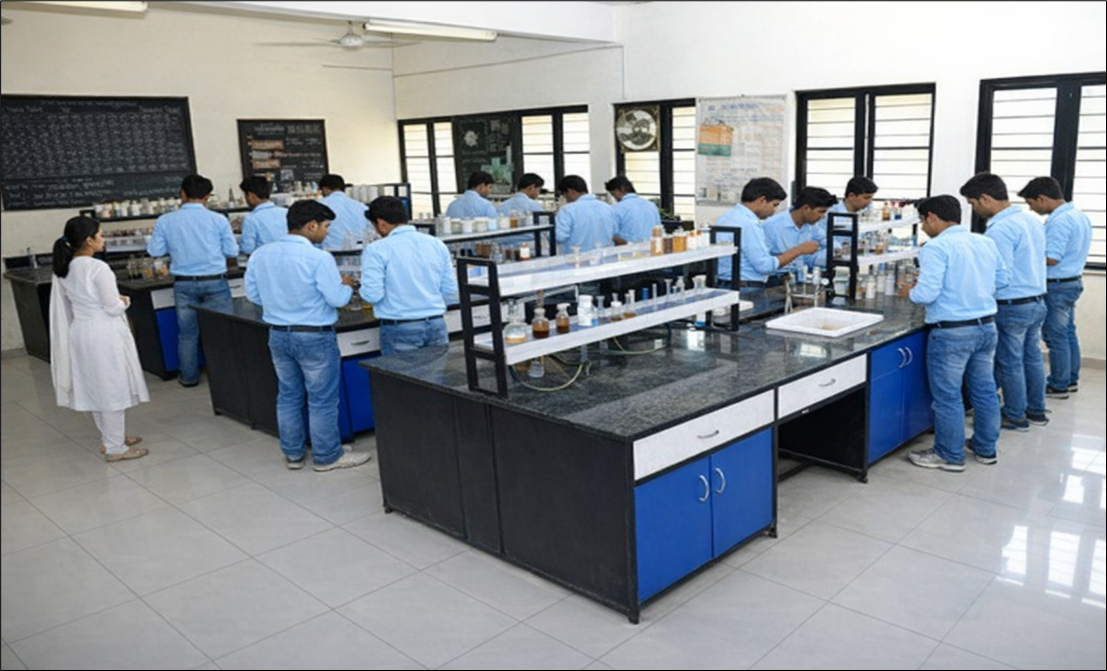
The department thus acts as a fertilizer to develop the practical approach to explore their hidden talents, personality and communication skills to fulfil the need of aspiring engineers. We at the department level in particular and institutional level in general at I.C.E.E.M. are moving ahead to provide the best facilities for our budding technocrats. Our Laboratories have been very well established not only to cover the complete syllabus but to motivate students to learn beyond the syllabus which definitely develops complete knowledge of the subject (both practical and theoretical) and develops students skill sets to become promising engineers in the future.


Key Features :

  • Highly qualified faculty Experienced in Industry/Research as well as teaching.
  • LCD projector facility to improve audio-visual teaching.
  • Consultancy and material testing facilities are provided.
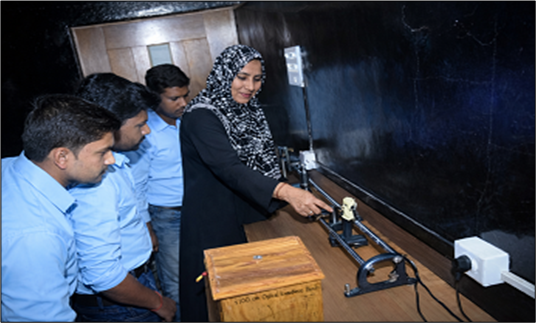
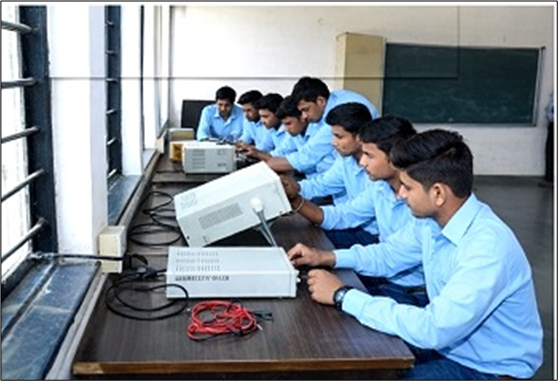
  • Well-equipped Engineering Physics, Engineering Chemistry and Electrical Laboratory
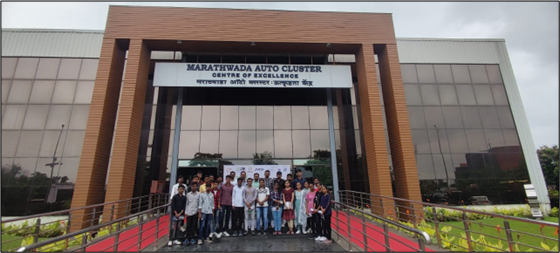
  • Regular Expert lectures and educational/Industrial visits for students.

Objectives :

  1. To prepare engineering professionals, recognized for the quality and significance of their knowledge, research and service.
  2. To provide widely recognized leadership in the improvement of Computer science and engineering, through innovation.
  3. Enhance the commitment of faculty, staff, and students to the centrality of diversity, social justice, and democratic citizenship.
  4. To help the students to excel in the field of Computer science through academic excellence and integrity and outstanding teaching.

VISION & MISSION

Vision :

Department of Science and Humanity strive to provide the opportunity to appreciate the value of science and recognize excellence in education to build their career in engineering to lead life of social cohesion and harmony adopting high values.


Mission :

To foster the intellectual and ethical development and help students become individuals who value and apply critical and logical thinking through science in our complex, diverse and ever-changing technological world.

POs, PEOs & PSOs

Program Outcomes :

PO 1 - Application of Engineering Knowledge: Apply knowledge of Engineering, management, mathematics and science for solving engineering problems. Analyze, plan and apply the acquired knowledge in basic sciences and mathematics in solving problems with technical, economic, environmental and social contexts.

PO 2 - Analysis of Problem: Ability to design and conduct experiments as well as to analyze and interpret experimental or collected data, simulate and fabricate circuits and systems, and make own projects utilizing the latest software tools and techniques. Design, build, and test analog & digital electronic systems for given specifications.

PO 3 - Design/development of solutions: Design a system, component, or process to meet the desired specifications, performance, and capabilities; compatible with health, safety, legal, societal, and environmental considerations.

PO 4 - Conduct investigations of complex problems: Use research-based knowledge and research methods including design of experiments, analysis and interpretation of data, and synthesis of the information to provide valid conclusions.

PO 5 - Modern tool usage: Create, select, and apply appropriate techniques, resources, and modern engineering and IT tools including prediction and modeling to complex engineering activities with an understanding of the limitations.

PO 6 - The Engineer and Society: Apply reasoning informed by contextual knowledge to assess societal, health, safety, legal, and cultural issues and the consequent responsibilities relevant to the professional engineering practice.

PO 7 - Environment and Sustainability: Understand and correctly interpret the impact of engineering solutions in global, societal, and environmental contexts and demonstrate the knowledge of a need for sustainable development.

PO 8 - Ethics: Understand ethics of life and professions and abide by them.

PO 9 - Individual and Team-work: Communicate effectively, demonstrate leadership qualities, and exhibit professional conduct in their career. Work with a multi-disciplinary team, and appreciate the role of a leader, leadership principles, and attitudes conducive to effective professional practice of Engineering.

PO 10 - Communication: Communicate and present effectively both orally and in writing, such as being able to comprehend and write effective reports and design documentation, make effective presentations and give and receive clear instructions.

PO 11 - Project management and finance: Demonstrate knowledge and understanding of the engineering finance and management principles as a member and leader in a team to manage projects in multi-disciplinary environments. Apply relevant shop practices in compliance with safety policies and current regulations for engineering workplaces.

PO 12 - Life-long learning: Engage in life-long learning, demonstrate knowledge and understanding of contemporary and emerging issues relevant to their domain, demonstrate knowledge and understanding of business practices and principles of management, and understand their limitations. Develop awareness of legal consequences of engineering solutions.


Program Educational Outcomes :

PEO 1: Provide students with the fundamental technical knowledge and skills in mathematics, science, and engineering to recognize, analyze, and solve problems, and to apply these abilities to the generation of new knowledge, ideas, or products in industry or government; and to implement these solutions in practice.

PEO 2: Provide students with the necessary instruction and practical experience to work well in local and international team environments and to be effective written and oral communicators, both for communicating ideas to other people, mentoring, and for learning from others.

PEO 3: Produce graduates who recognize the importance of and engage in lifelong learning, whether through self-study, continuing education courses or workshops, or through formal graduate-level education, and encourage others to have this same motivation.

PEO 4: Produce graduates who have an understanding of ethical responsibility and service towards their peers, employers, and society, and follow these precepts in their daily lives.


PSO's : 

PSO 1: Ability to design and analyze components and systems for mechanical performance.

PSO 2: Ability to apply and solve problems in fluid mechanics and power developing systems.

PSO 3: Ability to solve real-life problems with exposure to actual working in the field.

MEET THE HoD

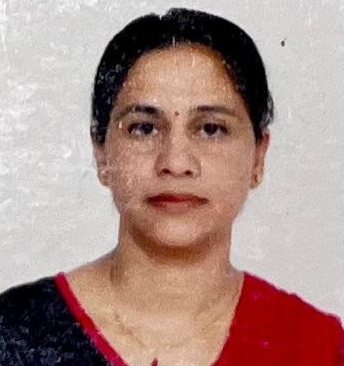
Prof.J.V.Dighole


Head Of Department:- Science &  Humanity.
Qualification:- M.Sc(Math)
Experience :- 15 year (teaching)


Science and Humanities department which lays the foundation for a successful career in Engineering at International Centre of Excellence in Engineering and Management. The First Year students are initiated into I.C.E.E.Ms way of learning and are groomed to take up their roles in society not only as good engineers but as good human beings.

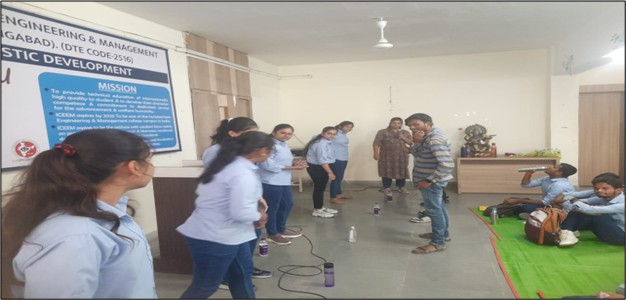
A team of dedicated staff members train the students for higher engineering subjects focusing not only on academics but also on their overall development through activities like skill development programs, mentoring, one day field trips, projects on sustainability and cultural and sports activities.

The department thus acts as a fertilizer to develop the practical approach to explore their hidden talents, personality and communication skills to fulfill the need of aspiring engineers. We at the department level in particular and institutional level in general at I.C.E.E.M. are moving ahead to provide the best facilities for our budding technocrats. Our Laboratories have been very well established not only to cover complete syllabus but to motivate students to learn beyond the syllabus which definitely develops complete knowledge of the subject (both the practical and theoretical) and develop student's skill sets to become promising engineers in future.

FACULTY

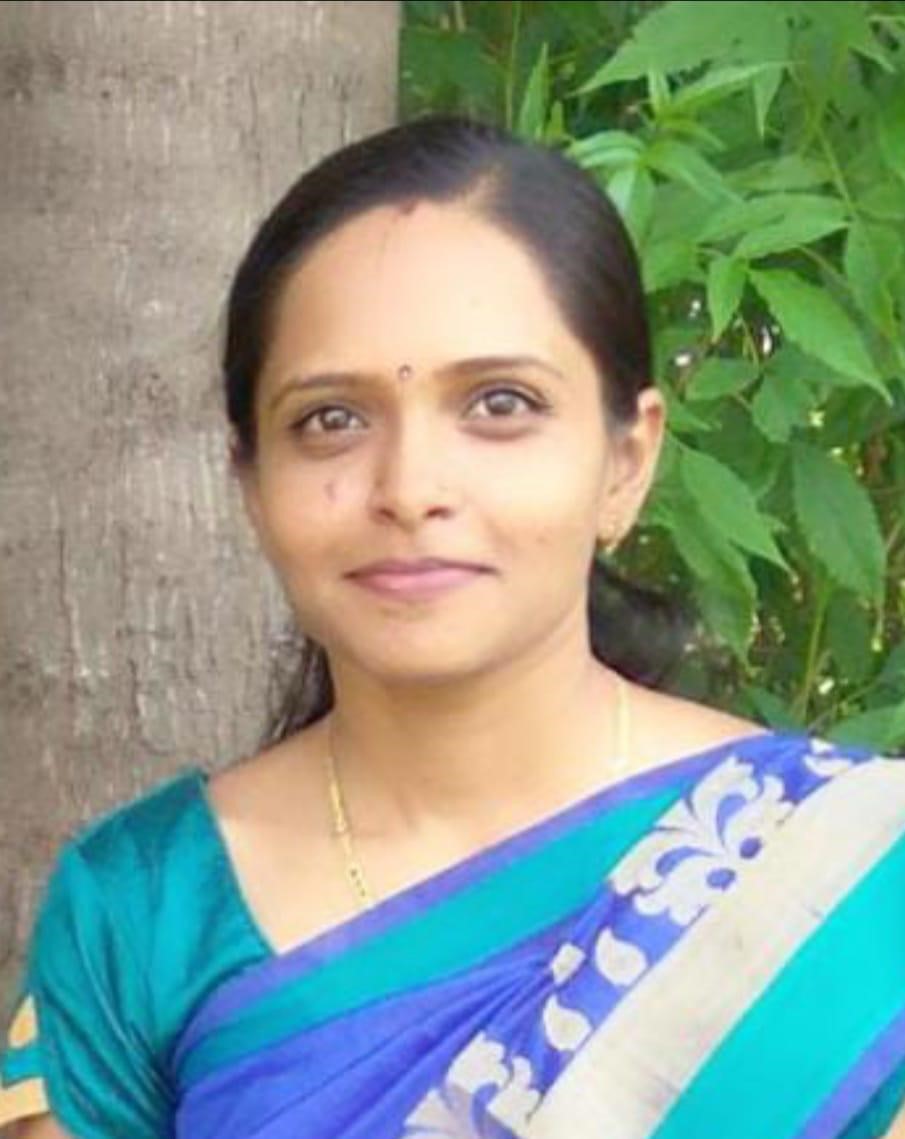
Prof. Jyoti Dighole
Prof. Jyoti Dighole  
HOD & Assistant Professor
Read More
Prof. M. Kale
Prof. Mangal. Kale  
Assistant Professor
Read More
Prof. Vaishnavi Diwakar
Prof. Vaishnavi Diwakar  
Assistant Professor
Read More
Prof. N.K.Siddiqui
Prof. N.K.Siddiqui  
Assistant Professor
Read More
Prof. R.B.Bagate
Prof. R.B.Bagate  
Assistant Professor
Read More
Prof. S.A.Chaudhari
Prof. S.A.Chaudhari  
Assistant Professor
Read More
Prof. Pooja Pawar
Prof. Pooja Pawar  
Assistant Professor
Read More

COMMITTEE

Sr.No.

Name of Faculty

Position

Parent organization

1

Prof.J.V.Dighole

Co-ordninator

ICEEM

2

Prof.M.P.Kale

Member

ICEEM

3

Prof.V.B.Shikhare

Member

ICEEM

4

Prof.S.R.Rathod

Member

ICEEM

5

Prof.N.V.Kalyankar

Member

ICEEM

6

Prof.Y.M.Khan

Member

ICEEM

7

Prof.S.S.Tarwade

Member

ICEEM

8

Prof.Sonam Welanjkar

Member

ICEEM

9

Prof.Ashwin Chavan

Member

ICEEM

10

Prof.P.R.Kathar

Member

ICEEM

11

Prof.D.N.Kende

Member

ICEEM

12

Prof.Shalini Dandale

Member

ICEEM

13

Prof.Nitin Magar

Member

ICEEM


LABORATORIES

Engineering Chemistry Lab : 

Basic Laboratory Information
Field Details
Department Name Science And Humanity
Laboratory Name Engineering Chemistry
Lab In-charge Prof. M. P. Kale
Supporting Staff Mrs. Pooja Bada
Year of Establishment 2011
Lab Location (Room No./Block)
Major Instruments / Equipment Details
Sr. No. Instrument Name Make / Model Quantity Approx. Cost (₹) Purpose / Use
1 PH Meter 2 2 5,735 To determine pH of water
2 Stirrer cum Hotplate 2 2 3,450 To stir solution or to heat solution
3 Distillation Plant 1 1 5,000 To obtain pure solution
Laboratory Cost and Resources
Particulars Details / Amount (₹)
Total Equipment Cost 20 Lakh
Furniture / Infrastructure Cost -
Annual Maintenance Cost -
Total Lab Cost (Approx.) 20 Lakh
Laboratory Manual / Reference Material
Sr. No. Experiment Title / Topic Lab Manual Link (PDF / URL)
1 Preparation and standardization of given analytical reagents -
2 Determination of water hardness by complexometric method -
3 Determination of pH of given solution using pH paper and pH meter -
4 Determination of percentage of moisture and ash in given coal sample -
5 Determination of viscosity of chemical compound -
6 Preparation of polymer -
7 Electrogravimetric estimation of metals (Virtual Experiment) -
8 Determination of chloride content in water -

Engineering Physics Lab :

  1. e/m by Thomson's method
  2. Determination of radius of curvature of plano- convex lens by Newton's ring.
  3. Determination of wavelength by diffraction grating.
  4. Resolving power of telescope.
  5. Study of CRO (amplitude, frequency, phase measurement),
  6. Specific rotation of sugar solution by Laurent's half shade polarimeter.
  7. Determination of band gap of a semiconductor.
  8. Semiconductor diode characteristics. (Ge Si zener LED)
  9. Transistor characteristics-CE configuration1
  10. Study of solar cell characteristics
  11. Wavelength of laser by diffraction grating
  12. Transistor as an amplifier

EVENTS

No Content Added Yet

ACTIVITIES

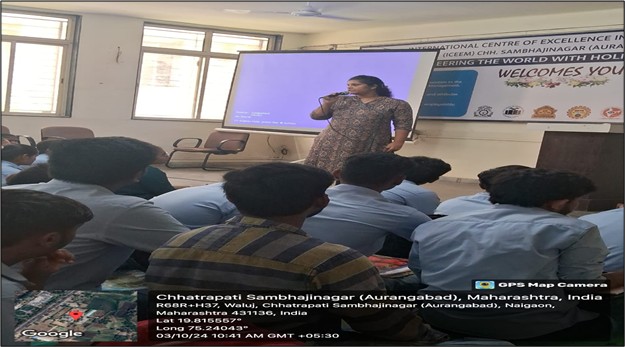
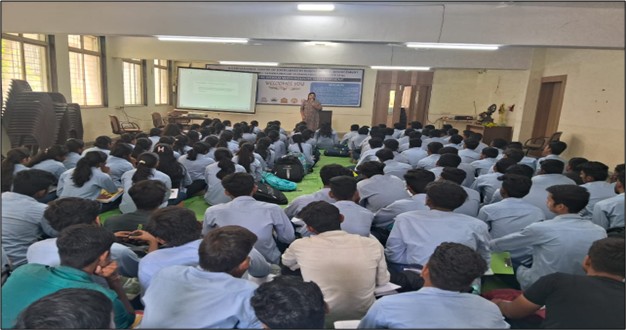
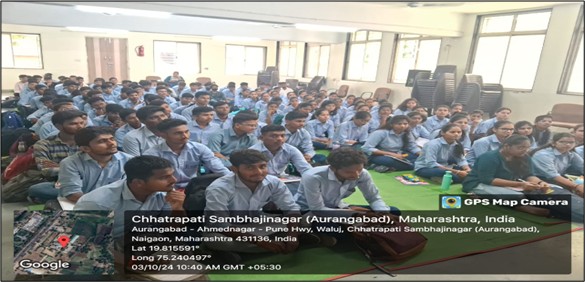
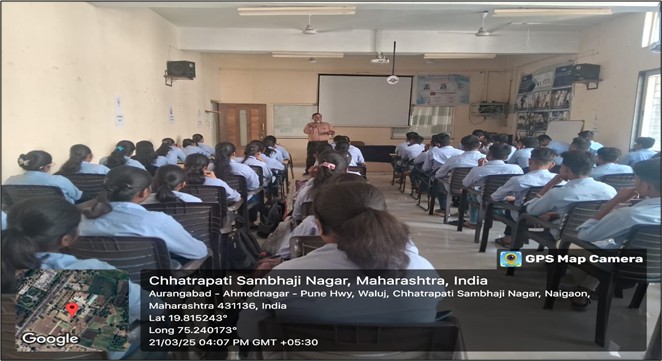
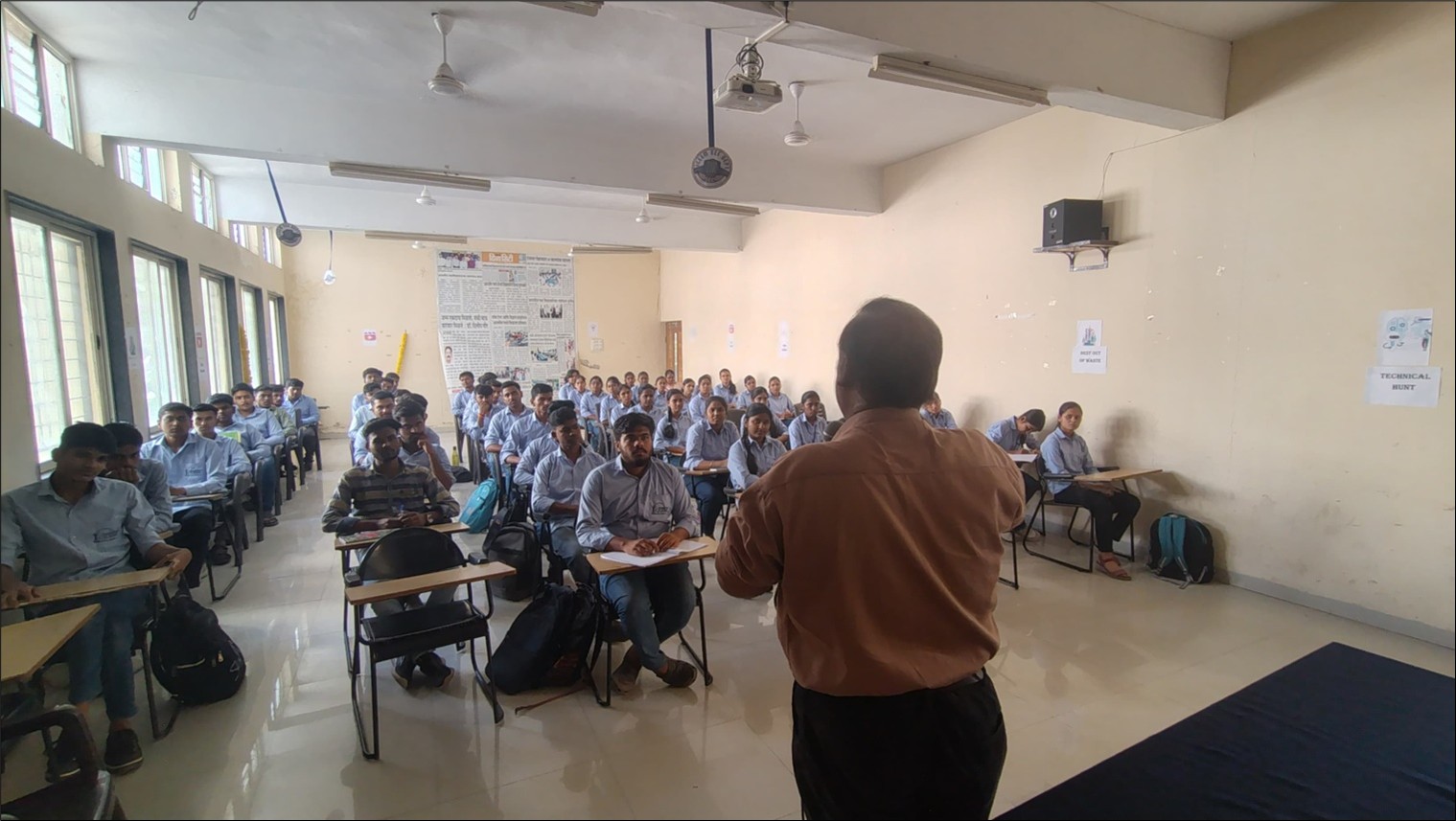
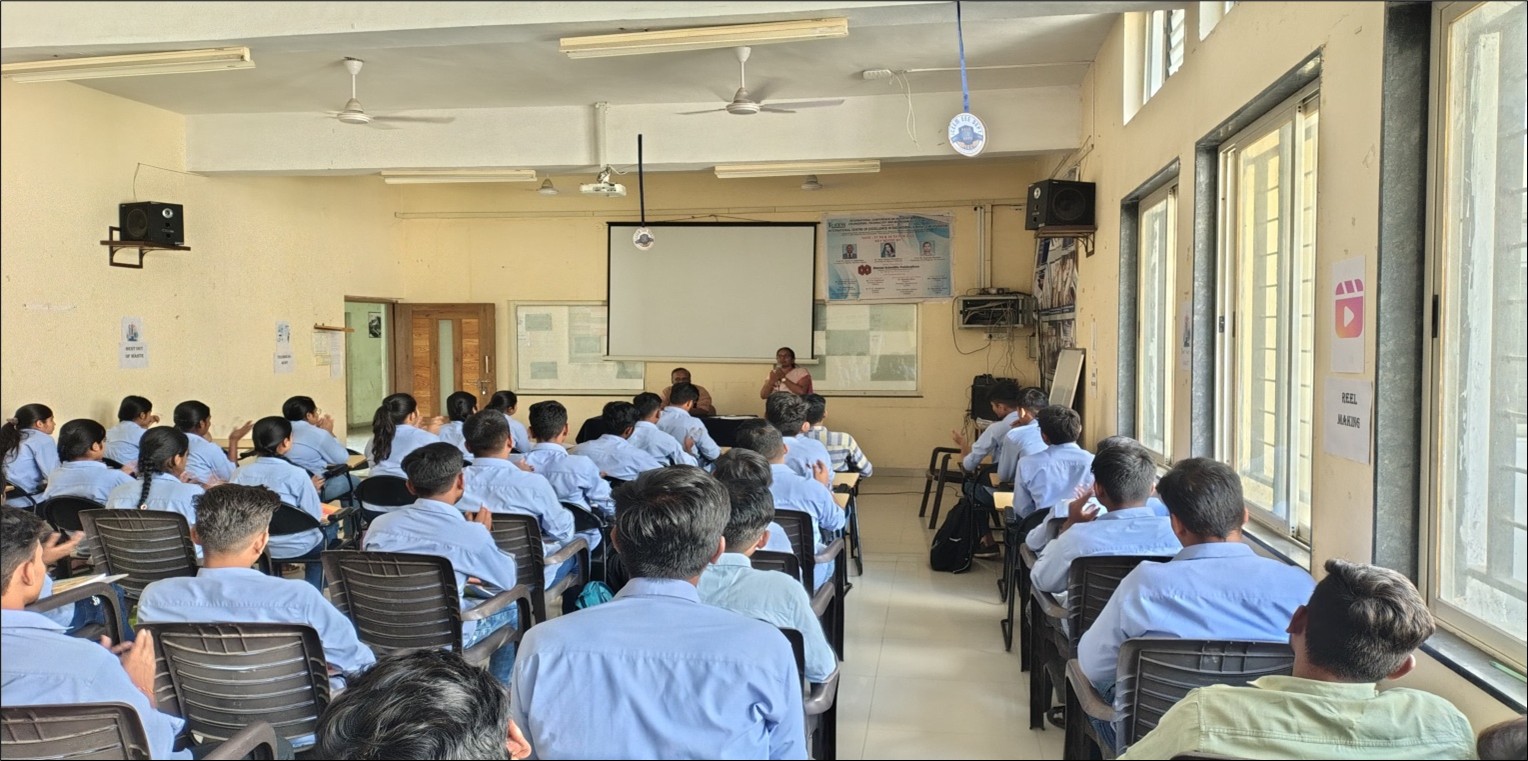
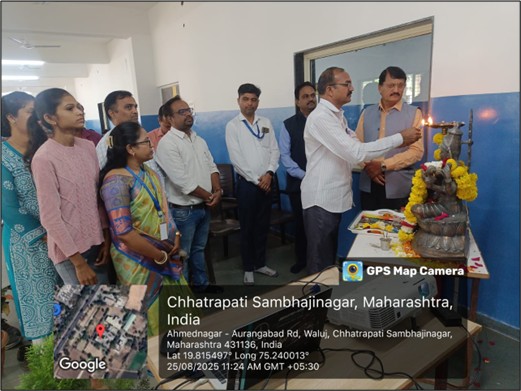
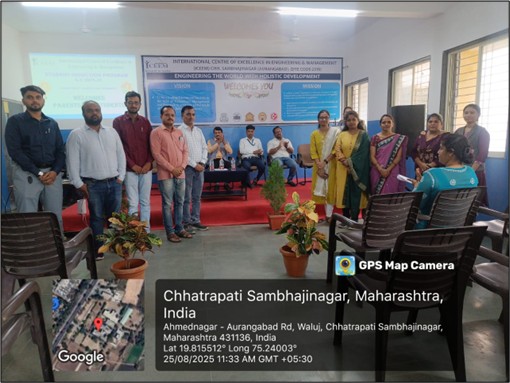
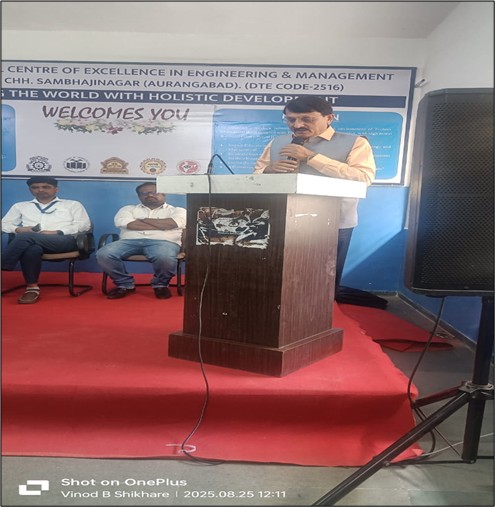
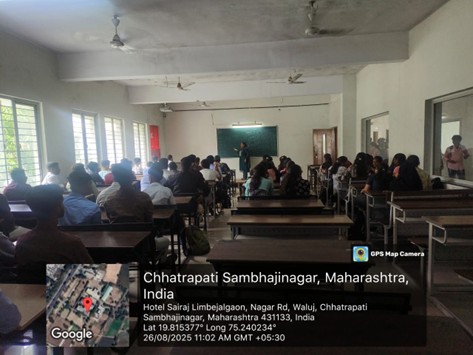
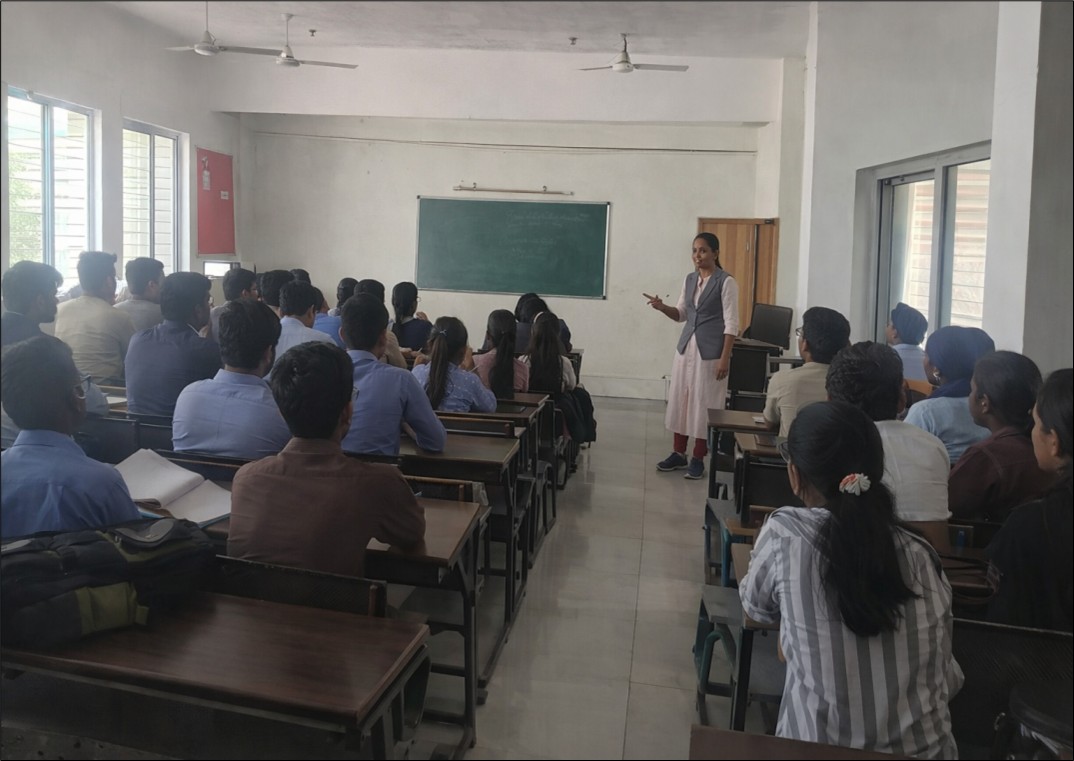
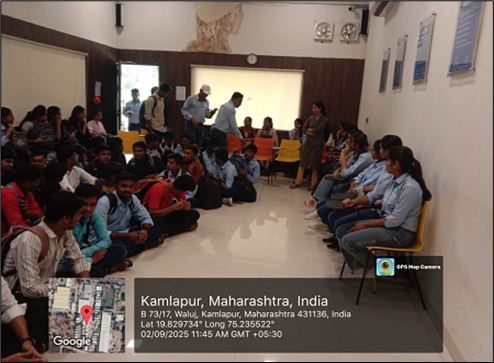
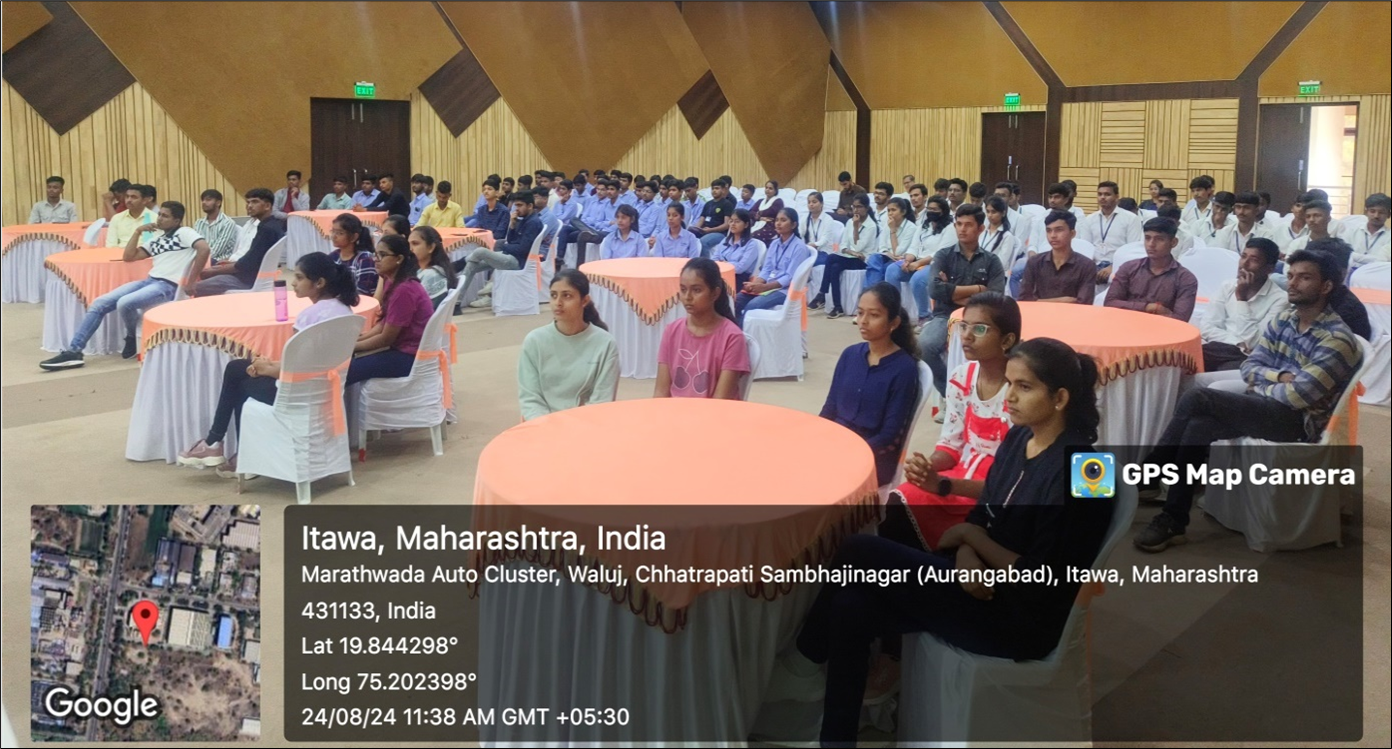
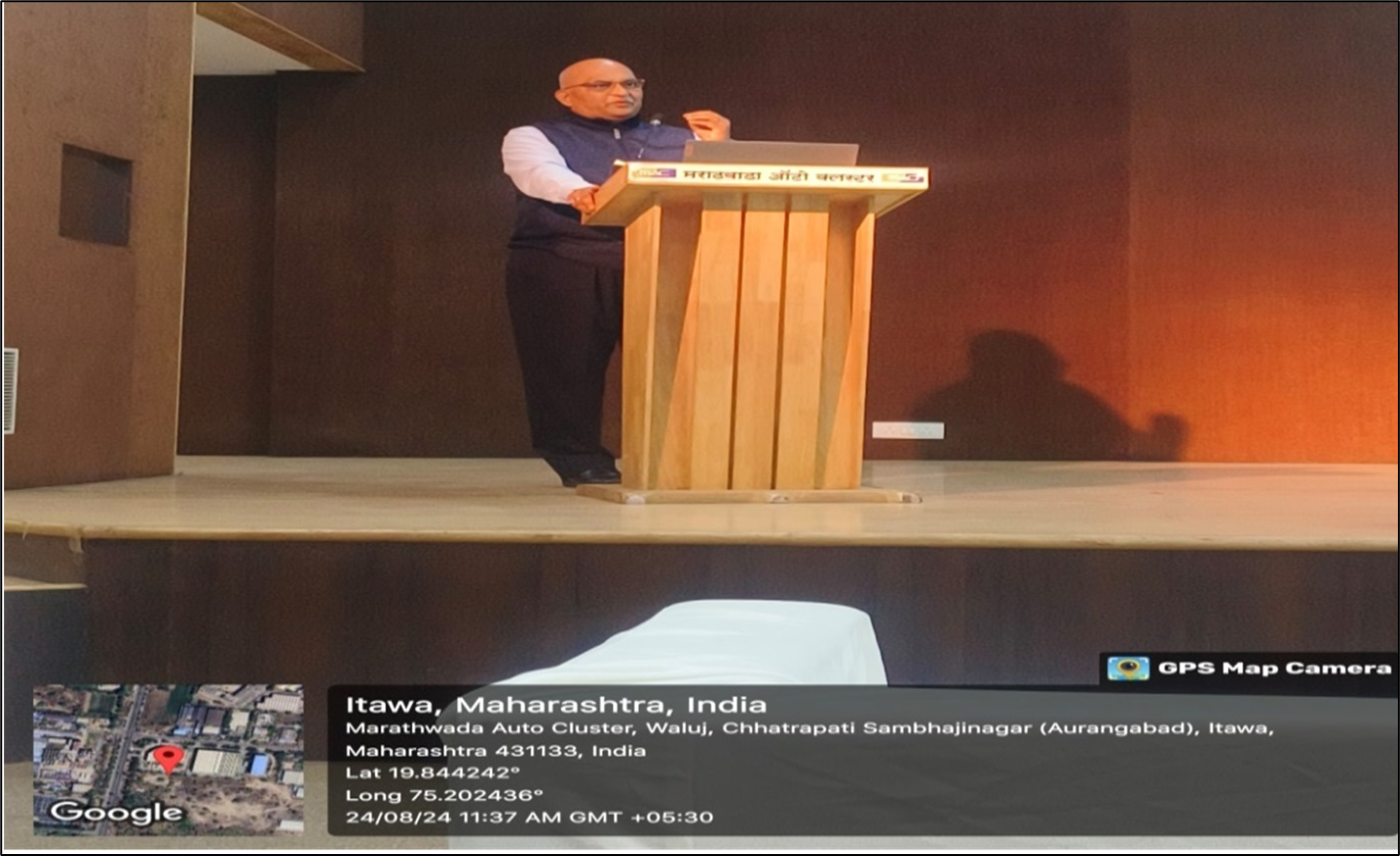
Expert talk photo

EXPERT TALK ON

“Time & Management and E-mail Etiquettes”

FOR FIRST YEAR ENGINEERING STUDENTS

ON 29TH SEPTEMBER, 2023

Expert Speaker:  Dr.Sagar Bhalekar

Assistant Professor in MBA Dept (ICEEM).

SambhajiNagar : 


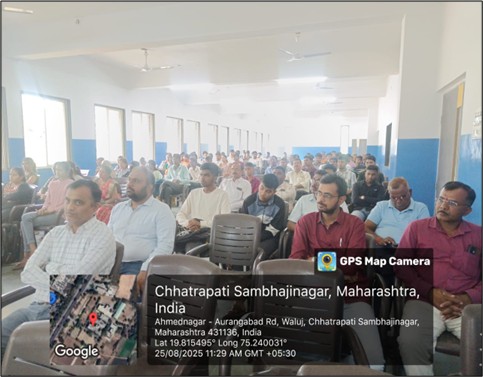
Parents Meet Photo 

Parents-Teachers Meeting on

10/10/2023 (Tuesday) .

Agenda of the meeting:

  1. Interaction between parents and teachers for creating healthy teaching-learning environment.
  2. To refresh rules and regulations of ICEEM engineering college.
  3. To inform parents regarding Detain Rules and Attendance Rules.
  4. To check and improve academic performance of students.
  5. To improve result of students by taking various actions.
  6. Feedback will be given by parents.


CONTACT

Prof.J.V.Dighole

Hod ICEEM

Drop us a message

PAPERS PUBLISHED

Sr. No. Title of Paper Author(s) Journal Name ISSN / ISBN DOI Volume / Issue / Page No. Year Publisher Indexed In
1 Energy Conservation Protocol in Wireless Sensor Network Prof. S. D. Gavande IJARESM ISSN 2455-6211 - Pages 978–984 2025 IJARESM UGC (IF 8.536)
2 Energy Conservation Protocol in Wireless Sensor Network S. D. Gavande IJIRCCE e-ISSN 2320-9801
p-ISSN 2320-9798
- Vol. 4, Issue 1, Jan 2016 2016 IJIRCCE Impact Factor 1.513
3 Energy Conservation Protocol Works in Physical Layer of WSN S. D. Gavande IOSR-JMCE e-ISSN 2278-1684
p-ISSN 2320-334X
- PP 23–28 2014 IOSR-JMCE -
4 Energy Conservation Protocol Using Sleep Scheduling in WSN S. D. Gavande IJCA ISBN 978-93-80885-81-5 - Vol. 114, No. 14, PP 23–25 2015 IJCA -
5 Novel One-Pot Synthesis of 4H-Chromene Derivatives Using Amino Functionalized Silica Gel Catalyst Kale M. P. Chinese Chemical Letters - - - 2020 Elsevier Scopus
6 A Review on Synthesis of Indole Pharmacophore Kale M. P. Parishodh Journal - 09.0014.PARISHODH Vol. 9, Issue 2 2020 Parishodh UGC
7 Synthesis of Quinoline Incorporated Pyrazolines from Chalcones and Hydrazides as Antiplasmodial and Antitubercular Agent Kale M. P. AJANTA ISSN 2277-5730 - Vol. IX 2020 AJANTA -
8 Efficient Microwave-Assisted C-H/N-H Functionalization for Quinoline-Pyrazoline Hybrids Kale M. P. ROYAL ISSN 2278-8158 - Vol. VIII, Issue II 2020 ROYAL IF 5.756
9 A Review on Sulphur in Drinking Water and Its Development in the Water Sediment System Kale M. P. Sustainable Innovative Trends in Civil Engineering - - - - - -
10 A Mini Review on Biological Activity of Nitrogen Containing Pharmacophore Kale M. P. International Journal for Innovative Research in Multidisciplinary Field - - - - - -
11 Land Use and Land Cover Analysis Using GIS: A Case Study of ICEEM, Waluj-Aurangabad Kale M. P. ESP IJAST - - Vol. 1, Issue 2, PP 28–33 - ESP -
12 Differential Transformation in Numerical Study: A Case Study Differentiability Equation Kale M. P. ESP Journal of Engineering & Technology Advancements - - Vol. 3, Issue 4, PP 33–36 - ESP -
13 A Review Paper on Cryptography Encryption & Compression Techniques with Matrix Prof. J. V. Dighole Parishodh Journal ISSN 2347-6648 - Vol. IX 2020 Parishodh UGC
14 Differential Transformation in Numerical Study: A Case Study Differentiability Equation Prof. J. V. Dighole ESP Journal of Engineering & Technology Advancements ISSN 2583-2646 - Vol. 3, Issue 4, PP 35–38 2023 ESP -
15 Land Use and Land Cover Analysis Using GIS: A Case Study of ICEEM, Waluj-Aurangabad Prof. J. V. Dighole ESP Journal of Engineering & Technology Advancements ISSN 2583-2646 - Vol. 3, Issue 2, PP 35–38 2023 ESP -
16 A Case Study of Applications of Financial Mathematics: Challenges and Future Prof. J. V. Dighole IJIRSET e-ISSN 2319-8753
p-ISSN 2347-6710
- - 2024 IJIRSET -
17 Applications of Laplace Transform in Science and Engineering Prof. J. V. Dighole IJARESM ISSN 2455-6211 - Vol. 13, Issue 6, June 2025 2025 IJARESM UGC

Books Published

Sr. No. Title Type
(Book / Chapter)
Author(s) Publisher ISBN No. DOI Year of Publication Book Link (URL) Remarks
1 Introduction to Programming Languages and C Fundamentals Book Ms. S. D. Gavande
Prof. N. S. Magar
Study Max 978-81-980341-2-0 - 2025 - -
2 Engineering Chemistry Text Book Prof. M. P. Kale Study Max 978-81-980341-0-6 - 2025 - -
3 Basics of Mathematical Methods in Physics Book Ms. Jyoti V. Dighole The Registrar, YCMOU, Nashik - 01/10/2025 2025 View -

Workshops / STTP / FDP

Sr. No. Name of Faculty Type
(Workshop / STTP / FDP)
Title Organized By Date(s) Role
(Attended / Conducted)
Remarks
1 M. P. Kale FDP Prompt Engineering for Educators ATAL 10/11/2025 – 15/11/2025 Attended -
2 FDP Outcome Based Education ISL Engineering College 01/11/2025 Attended -
3 Expert Talk How to Write Research Papers ICEEM 21/07/2025 Conducted Expert Talk
4 Workshop NPTEL Workshop CSMSS 24/05/2025 Attended -
5 Webinar Binary Based Accreditation IQAC Cluster 21–22/08/2025 Attended -
6 STC Yoga and Wellness Dr. B.A.M.U. 17/03/2025 Attended -
7 FDP Role of AI in Water Management ATAL 10/02/2025 – 15/02/2025 Attended -
8 FDP Navigating Climate Variability and Its Impact ATAL 28/02/2025 – 03/03/2025 Attended -
9 Conference Emerging Trends in Research Methodology in Higher Education System JAT, Malegaon 03/02/2025 Participant Conference
10 J. V. Dighole Expert Talk How to Write Research Paper ICEEM 21/07/2025 Attended Expert Talk
11 Conference Emerging Trends in Research Methodology in Higher Education System JAT, Malegaon 03/02/2025 Participant Conference
12 FDP Cyber Physical Systems and Cyber Security ATAL 27/10/2025 – 01/11/2025 Participant FDP
13 FDP Smart Cities & Mobility ATAL 10/02/2025 – 15/02/2025 Participant FDP
14 Webinar Filing Patent in India K. K. Wagh Polytechnic 01/08/2020 Participant Webinar
15 FDP Opportunities in Big Data & ML ICEEM 05/06/2020 Participant FDP
16 Seminar Recent Advances in Mathematics R.N.C Arts, J.D.B Commerce & N.S.C Science College, Nashik Road 28/09/2012 Participant Seminar
17 FDP Cyber Threat Intelligence and Defense Mechanisms ATAL 27/10/2025 – 01/11/2025 Participant FDP
18 V. S. Divakar Expert Talk How to Write Research Paper ICEEMI 21/07/2025 Attended Expert Talk
19 Conference Emerging Trends in Research Methodology in Higher Education System JAT, Malegaon 03/02/2025 Participant Conference
20 Training Program NEP 2020 Orientation & Sensitization Programme Dr. B.A.M.U., Chh. Sambhajinagar 21/07/2025 – 30/07/2025 Participant -
21 ATAL Role of Artificial Intelligence in Sustainable Waste Management Fr. Conceicao 15/02/2025 Participant -
22 Naziya Khanam FDP NPTEL – Fundamentals of Artificial Intelligence AICTE July 2025 – Oct 2025 Completed NPTEL Course & FDP
23 FDP Periodic Innovations in Perspective of VLSI of Semiconductor ICs ATAL 15/12/2025 – 20/12/2025 Participated & Completed FDP